Complimentary Discovery Soap on Orders $50+ | 🇨🇦 Shipping Included in Canada on Orders $150+
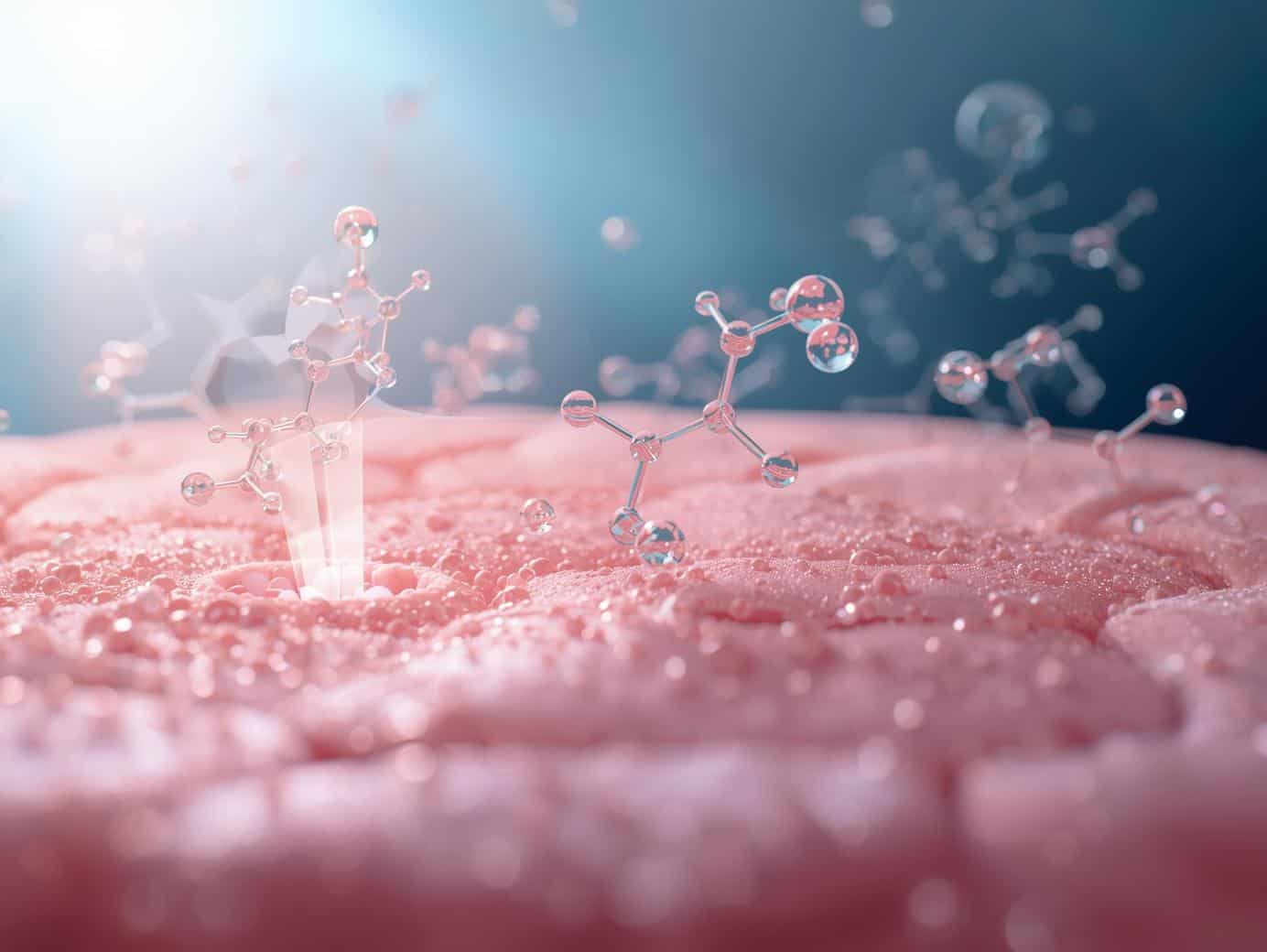
In this extraordinary essay, we shed light on a topic that is almost always forgotten, a topic that is of utmost importance for a healthy and vibrant skin. Unsaponifiables are compounds found exclusively in the highest grades of oils and fats: extra virgin and unrefined. They are the key to maintaining a resilient skin barrier. We dive into this discussion here, albeit not in as much depth as we originally wanted. We are proud to state that this essay was written without the assistance of artificial intelligence.
Natural soap goes far beyond cleansing. Cleansing is the act of removing dirt, germs, bacteria, and other unwanted micro-organisms from the skin, that could otherwise lead to irritations or, in some cases, skin infections. A soap bar is primarily made up of soap molecules: sodium salts of fatty acids, and glycerin: a humectant that is a natural by-product of saponification. However, almost no one speaks of the unsaponifiables. Unsaponifiables are compounds present in unrefined fats and extra virgin oils, do not participate in saponification, and thus retained in the final bar. Even though they make up a small percentage of the bar, their skin healing and nourishing effects are extremely powerful. This essay attempts to briefly explore their characteristics in the hope of bringing awareness of their impact to curious minds.
An olive tree is characterized by a long lifespan, often reaching centuries before it dies. At just the young age of 5, it begins bearing fruits: olives. As it matures, a healthy tree can produce around 30 kilograms of olives annually, usually harvested in later summer or early autumn.
Through mechanical cold pressing, extra virgin olive oil is extracted from olives. The yield is estimated to be 10% to 20% of the total mass of the olive. The remaining mass includes water, pomace – a semi-solid byproduct made up of the skin, pulp, and crushed pits, and more oil that needs heat or solvents to be extracted.
98% to 99% of extra virgin olive oil is made up of saponifiable matter. This matter is primarily triglycerides, and in small trace quantities: diglycerides, monoglycerides, and free fatty acids. In a superfatted bar, excess oil offers benefits for the skin. We will discuss those benefits in a different post.
Our focus narrows on the unsaponifiables. While they represent 1% to 2% of the biomass of extra virgin olive oil, their role in providing repair and nourishment for the skin (and overall health) is essential. They are grouped in the following categories: squalene and other hydrocarbons, triterpenic alcohols, phenolic compounds and pigments, phytosterols, and tocopherols.
Squalene accounts for 40% of the unsaponifiable matter in extra virgin olive oil. It is a hydrocarbon as it is made up of hydrogen and carbon atoms only. It is naturally found in human sebum, but its natural production declines with age. Individuals who produce too much squalene are prone to acne. Squalene is a powerful antioxidant. Due to its chemical structure, it oxidizes much faster than other critical components, protecting them from UV radiation. Amazingly, when Soap Therapy is applied, squalene has a very high pore penetration at a rate of 2 mm per second. Therefore, even a brief contact will lead to a generous amount entering the pores. The skincare industry hydrogenates this natural compound through heavy industrial processes into “squalane” to extend shelf life.
Triterpenic alcohols make up 25% of the unsaponifiable matter in extra virgin olive oil. They are heavy and waxy alcohols, which is why they typically rest on the skin after the cleansing providing a protective film, and giving a creamy feeling. They act as biological signals telling the skin to heal wounds faster, and helping with collagen synthesis. The two most common forms are Erythrodiol and Uvaol.
Phenolic compounds and pigments form 17% of the unsaponifiable fraction. Phenolic compounds are either secoiridoids (unique to the olive family) or phenolic alcohols. Oleocanthal is a secoiridoid that acts similar to Ibuprofen, without the side effects. As you wash, trace amounts are absorbed by the skin and help shutting down inflammatory signals, and protecting collagen from breaking down. This is very important because low-level chronic inflammation is a leading cause for skin aging. Oleocanthal has also been shown to have strong antibacterial properties, specifically against strains of bacteria that can cause acne. Hydroxytyrosol is a phenolic alcohol and is considered one of the most powerful natural antioxidants. It scavenges free radicals and protects the skin from oxidative damage. Hydroxytyrosol does it by “gifting” free electrons to free radicals, that would otherwise “steal” it from DNA or collagen. Chlorophyll and Carotenoids are the most common pigments in extra virgin olive oil. Chlorophyll is the “dark” antioxidant, scavenging free radicals at night time. Carotenoids are the precursors to retinol (Vitamin A) – the gold standard in cell turnover and anti-aging.
Phytosterols – 15% of the unsaponifiable matter – are compounds similar in function to cholesterol in humans. Cholesterol is found in the Stratum Corneum, known as the skin barrier, making up 25% of the intercellular lipids – the lipids that hold the cells together in the brick and mortar model. The most abundant phytosterol is beta-sitosterol. It greatly resembles the structure of human cholesterol, giving it a great ability to penetrate the stratum corneum and act as a repair agent to help prevent trans-epidermal water loss – a phenomenon that can lead to eczema or other related skin inflammatory conditions.
Call it nature’s wisdom or else, but the fact that tocopherols (Vitamin E) make up only 3% of the unsaponifiable matter, is a testament that only trace amounts of that powerful compound are needed to stop a chain reaction of rancidity. Too much tocopherol would have the opposite effect.
In refined olive oil, squalene, tocopherols, phenolic compounds, phytosterols and pigments are destroyed.
Coconut trees are native to Southeast Asia. While being a very old species, humans began using them about 12000 years ago, and breeding them for specific traits about 5000 years ago. An average coconut tree lives about 60 to 80 years, rarely extending to a century. The trees start producing fruits around the age of 10, peaking at 20, and then declining around 60. A typical mature tree will produce anywhere from 50 to 80 coconuts per year, if taken care of. The average mass of a coconut is 1.5 kilograms. The white layer inside – sometimes referred to as the coconut “meat” – is about 25% of the total mass, roughly 375 grams. From this mass, a little under a third can be extracted as unrefined cold pressed virgin coconut oil. The rest is made up of water and fiber.
Unrefined coconut oil is 99.5% saponifiable matter, leaving an impactful 0.5% in unsaponifiable form. Phytosterols make up the majority of the unsaponifiable fraction at around 80%. Phenolic compounds constitute 15%. Tocopherols and tocotrienols, squalene and hydrocarbons, all together are 5% of the unsaponifiable fraction. Their benefits for the human skin and human health overall are discussed in the previous section.
All the unsaponifiable matter is destroyed in refined grade.
The earliest evidence of humans using the castor plant dates to around 24000 years ago. It is indigenous to tropical East Africa, specifically Ethiopia. However, India is now considered the dominant trade force accounting for over 90% of international production.
Unlike the aforementioned trees, the castor plant has a relatively shorter lifespan, living on average 5 to 7 years, with some exceptional varieties extending to 15 years of life. It can reach a height of about 10 meters and a horizontal spread of 5 meters. It has giant leaves that are about 75 cms long.
An organically grown castor plant, typically yields 500 capsules – the fruit of the castor plant. Every capsule has exactly 3 seeds (known as beans in mainstream discussions). Each seed weighs about 300 milligrams.
The cold pressing of castor seeds generates anywhere from 33% to 45% of extra virgin oil in mass. In the castor oil industry, extra virgin and virgin grades are not as regulated as in the olive oil industry – International Olive Council. However, an extra virgin label usually indicates a more premium first press of the seeds.
While castor oil has great benefits through the excess ricinoleic acid in a superfatted bar, this discussion will be part of another essay. Just like coconut oil, castor oil is about 99.5% saponifiable matter and 0.5% unsaponifiables; a distribution that is very similar to coconut oil.
All the unsaponifiable matter in castor oil is destroyed when it is refined.
The shea tree is possibly one of the oldest botanicals discussed in this post, dating back to over 125 millions years ago. Humans began cultivation more than 4000 years ago. It is native to sub-Saharan Africa with Nigeria, Burkina Faso, Mali, and Ghana being the main producers. It does not thrive outside this environment and very tough to grow outside its native geographical area.
A shea tree typically lives 300 years, with some extending up to 500 years. It can reach a height of 15 meters. It starts bearing fruits at the age of 15 and peaks around 45. A mature tree produces anywhere between 15 and 20 kilograms of fruits annually. Due to a high variability in fruit size, 15 to 20 kilograms of fruits translate to anywhere from 800 fruits to 1600 fruits. Each fruit contains one large nut. The weight of the nut is a quarter that of the fruit. The shea butter extracted from the nut using the cold pressing technique is 40% the weight of the nut. The nut typically contains up to 55% butter but not all the butter can be extracted with this clean technique.
Shea butter is known to have a much higher percentage of unsaponifiable matter, ranging anywhere from 3% to 20%. The analysis conducted by a national laboratory in Ghana from our supplier returned a 4.5% unsaponifiables.
60% to 75% of the unsaponifiable matter is triterpenic alcohols. One special alcohol, Lupeol, accelerates the skin barrier repair by stimulating Keratinocyte proliferation – the birth of new cells. We remind the reader that triterpenic alcohols, as discussed previously, have a great role in collagen preservation, wound healing, and cell regeneration.
Cinnamic acid esters make up 15% to 25% of the unsaponifiable matter of shea butter. It acts as a natural UVB (rays that lead the sunburns) filter. Cinnamic acid esters also help accelerate wound healing by “knitting” the skin back together after a cut.
There is also a small percentage of phytosterols making up 2% to 5%.
The unsaponifiables in shea butter are significantly reduced in a refinement process.
Soap Therapy not only cleanses your skin, but also heals it and nourishes it. Through our promise of using only the most premium oils and fats of highest grade: extra virgin and unrefined, we offer you a plethora of benefits in our bars rich in unsaponifiable compounds that help build a resilient skin barrier, a powerful first line physical defence, against harmful and malignant organisms. But wait; there are other ingredients that do not participate in the saponification process and bring with them amazing benefits to your skin. This will be discussed in part 2. We are proud to share our findings with you, continuing to build trust in a product that will transform your experience, that will enhance your condition of existence, slowly but surely. What are you waiting for to be part of this return to nature?
CATEGORIES